Technical Decision Trees
What are the technical decision trees?
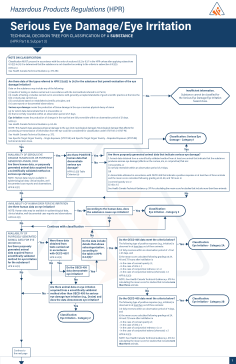
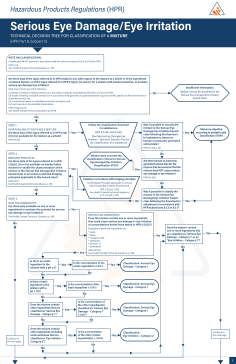
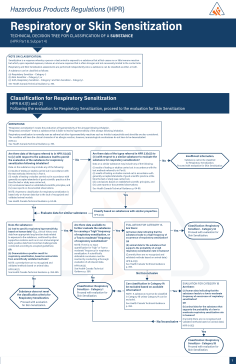
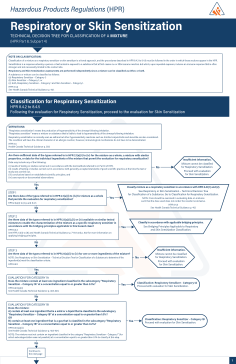
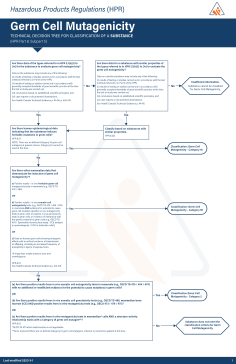
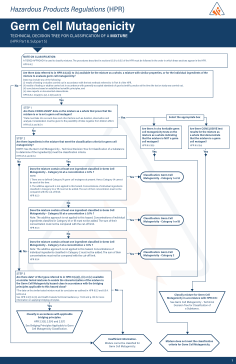
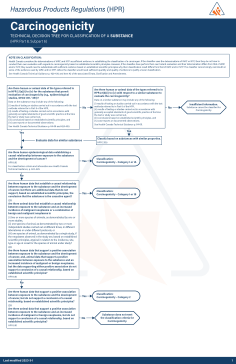
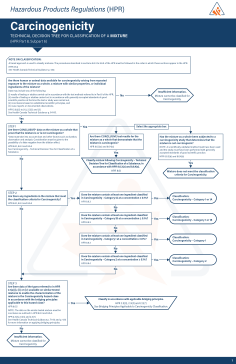
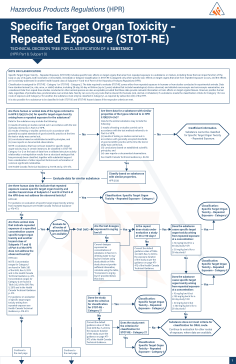
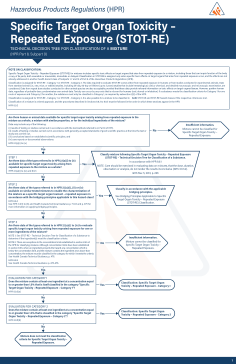
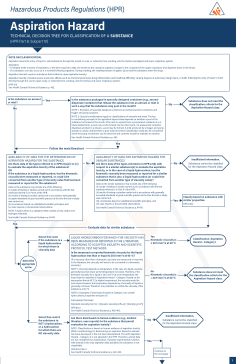
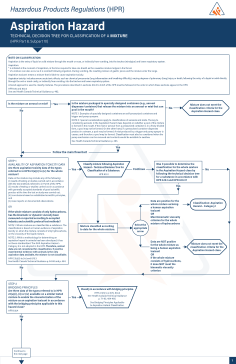
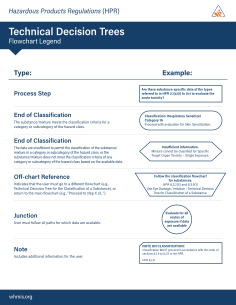
The technical decision trees depict a sequential logic flow to support suppliers in classifying the health hazards of hazardous products destined for Canadian workplaces in accordance with the requirements of the Hazardous Products Regulations (HPR).
The technical decision trees cover key classification requirements identified in each Subpart of Part 8 of the HPR. They are not exhaustive of all classification requirements of the HPR and may not include all relevant classification considerations for any particular hazardous product.
How can the technical decision trees be used?
The technical decision trees are intended to supplement the HPR and the Guidance on the WHMIS supplier requirements (‘WHMIS Supplier Guidance’). The technical decision trees do not introduce different or additional requirements beyond those of the HPR.
Prior to using the technical decision trees, users should familiarize themselves with all classification requirements of the HPR. These requirements include those of Part 2, which provides a general overview of procedures to be followed in the hazard classification process, types of data that must be considered and principles that are relevant to classification.
Users are encouraged to consult the WHMIS Supplier Guidance where additional guidance is needed. The WHMIS Supplier Guidance provides a more exhaustive overview of considerations when conducting a classification evaluation than can be provided in the technical decision trees.
Where to start - Gathering data as a prerequisite to apply any technical decision tree
When classifying the health hazards of a hazardous product, users must gather all available data. For more information on types and sources of data, consult section 2.1 of the HPR and the discussion of that section in the WHMIS Supplier Guidance for a product that is a substance or material and subsection 2.2(2) of the HPR and the discussion of that subsection in the WHMIS Supplier Guidance for a product that is a mixture.
How to select which technical decision trees to apply
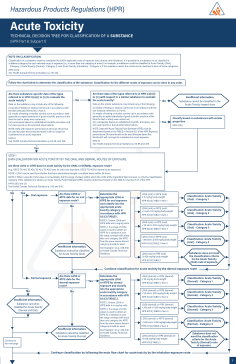
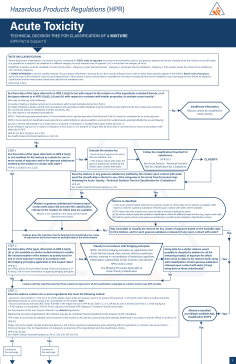
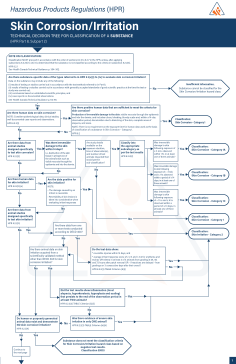
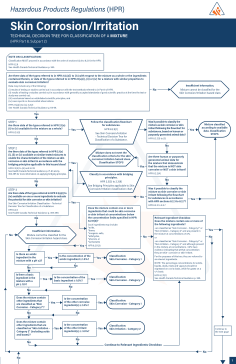
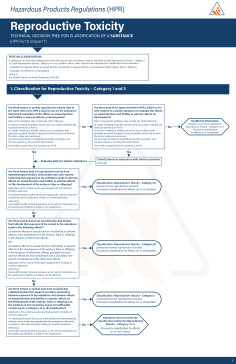
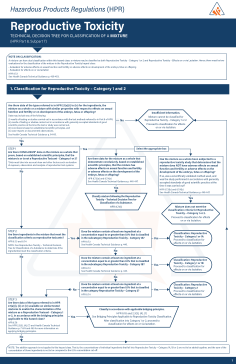
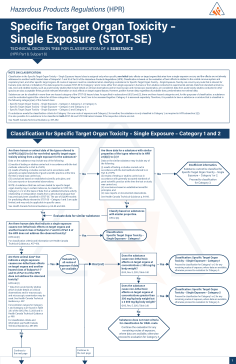
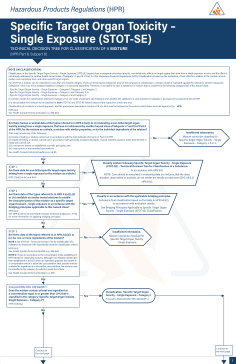
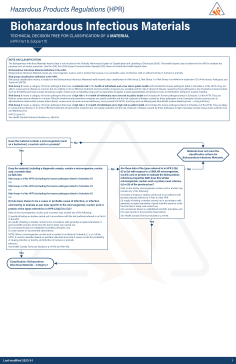
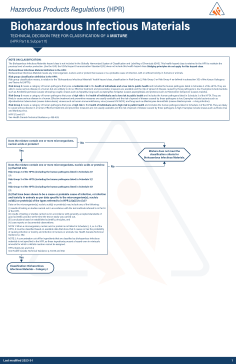
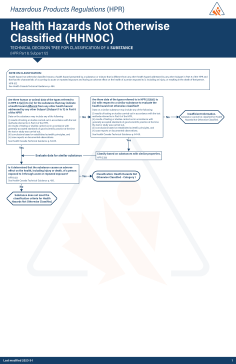
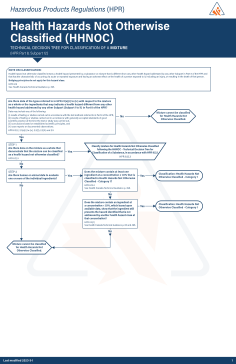
There is one technical decision tree for a product that is a substance (or material in the case of Subpart 11), and one for a product that is a mixture, for each health hazard class of Part 8 of the HPR. To determine which trees to apply, suppliers must determine whether their product is a substance/material or a mixture.
Users are referred to section 2 of the Hazardous Products Act (HPA) for definitions of the terms ‘substance’ and ‘mixture’. The term ‘material’ is not defined in the HPA, but under the HPR it is generally used in the context of Biohazardous Infectious Materials.
All available data must be evaluated against the criteria for each health hazard class, whether using the technical decision trees for a substance/material or the trees for a mixture.
Although the term ‘substance’ refers, in principle, to a single entity, users need to consider whether any impurities, stabilizing solvents or stabilizing additives are known to be present in the substance and that need to be considered for classification. For more information, consult subsection 2(6) of the HPR and the discussion of this subsection in the WHMIS Supplier Guidance.
Important notices
In case of discrepancy between the technical decision trees and the HPA and the HPR, the official versions of the HPA and the HPR prevail.
The technical decision trees may be updated periodically to correct errors, to provide clarification or to address amendments to the HPR. Users who elect to use these technical decision trees are advised to regularly refer back to this page to ensure they are applying the latest versions of the trees.
Hazardous Products Regulations
Part 8 Health Hazard Classes
Technical Decision Trees for the Classification of Substances and Mixtures
List of Subparts